
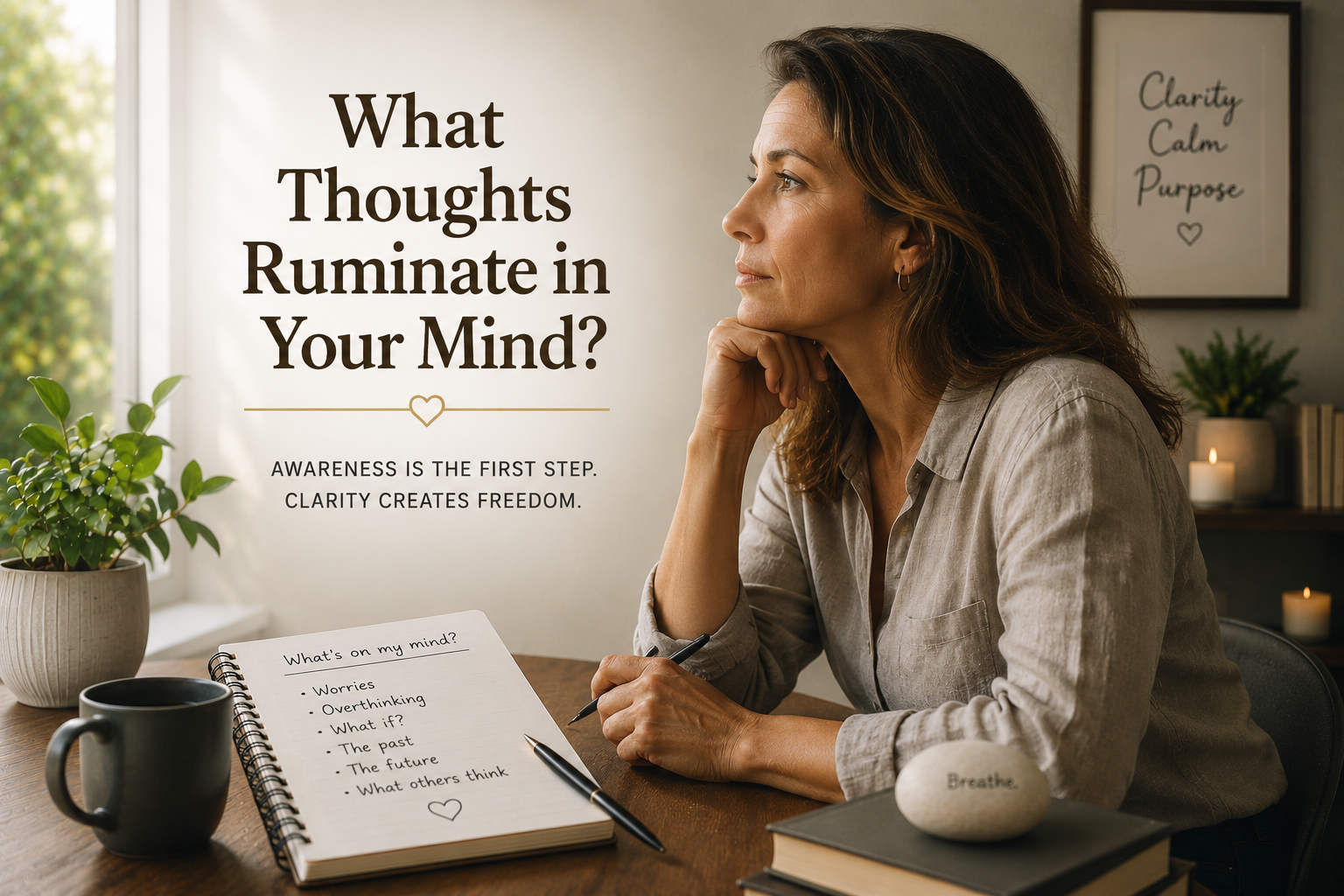
What thoughts are rolling around in your mind right now? When was the last time you stopped to notice what you were thinking? Most of us spend our days moving from one task to the next without paying much attention to the constant stream of thoughts running through our minds. Some are helpful, some are neutral, and many simply repeat themselves day after day. Our brains are designed to think continuously, but without awareness, those thoughts can quietly shape how we experience ourselves, other people, and the world around us. Our thoughts influence our emotions, our decisions, our habits, and ultimately the quality of our lives. When we repeatedly focus on what is wrong, what might go wrong, or what we cannot control, it becomes easy to feel overwhelmed, anxious, frustrated, or emotionally drained. Over time, these patterns can affect our mental, emotional, and even physical well-being.
For me personally, I have found something quite different when it comes to my spiritual well-being. Whenever I feel overwhelmed or consumed by my thoughts, I return to my spiritual practices. They remind me that I don’t have to believe every thought that enters my mind. They help me reconnect with a place of peace, trust, stillness, and truth. They create space between my thoughts and my response to them, allowing me to choose a different way of being. So, again, what thoughts are rolling around in your mind today? Perhaps you’re wondering how you’ll get everything done. Maybe you’re worried about finances, your health, your career, your relationships, or the future. Perhaps you’re feeling frustrated by someone else’s behavior or irritated by circumstances beyond your control. If I’m honest, many of my own thoughts sound something like this:
- What do I need to accomplish today?
- How am I going to get everything done?
- How can I reach more people?
- Why are the neighbor’s dogs barking again?
- When will I have time to do the shopping?
- What’s for dinner tonight?
- When will this pain finally go away?
- How will I prepare financially for retirement?
- Why can people be so unkind to one another?
And the list goes on.
What surprised me wasn’t that I had these thoughts—it was how many of them were focused on problems, frustrations, or worries. I realized that much of my thinking was directed outward, judging people, circumstances, or situations I couldn’t control. While I certainly have positive thoughts too, I discovered they didn’t always receive the same amount of attention. Negative thinking is exhausting. The good news is that awareness creates choice.
I’d like to invite you to try a simple experiment. For just one day, notice your thoughts as they arise. Don’t criticize yourself or try to suppress them. Simply observe them with curiosity. Then ask yourself two gentle questions:
- Is this thought helping or harming me?
- Does this thought leave me feeling contracted or expanded?
You may begin to notice familiar patterns that have been running automatically for years. Once you become aware of them, you can begin to choose differently.
For example, when I hear the neighbor’s dogs barking, my first reaction may be irritation. But what if I pause and consider another perspective? Those dogs are simply doing what dogs do. Perhaps they’re protecting their home. Perhaps they’re alerting their owners to something unusual. I can even choose gratitude that they provide an extra layer of awareness in my neighborhood.
- Does that change the situation? No.
- Does it change how I experience the situation? Absolutely.
At first, replacing familiar thought patterns can feel awkward or even unnatural. That’s perfectly normal. Like any habit, it takes practice. But over time, you begin to realize that you are not powerless over your thoughts. You can learn to question them, challenge them, and replace them with perspectives that bring greater peace, compassion, and clarity. Our lives are shaped not only by what happens to us, but by the meaning we give to those experiences. By becoming more aware of our thoughts and choosing those that serve us well, we create space for greater calm, resilience, joy, and emotional freedom. Sometimes the smallest shift in thinking can become the beginning of the biggest transformation.
