
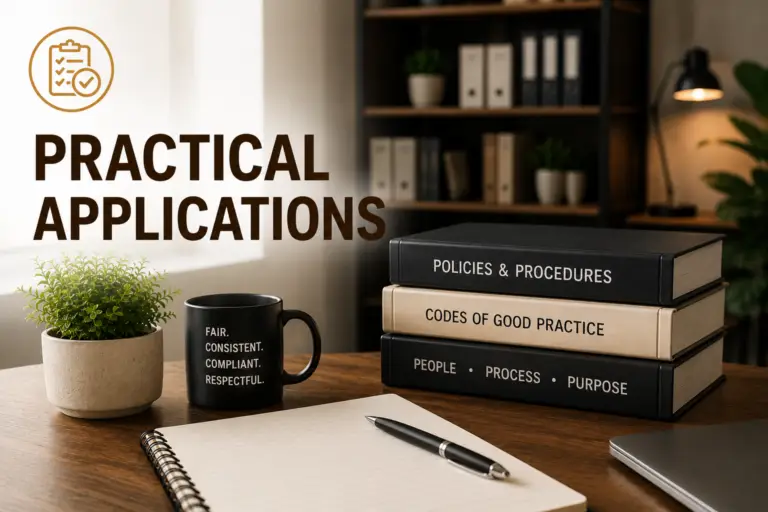
Practical application is where knowledge becomes action and meaningful change begins to take shape. When you learn how to apply principles, strategies, and best practices in real-world situations, you build greater confidence, clarity, and effectiveness in your professional life. Practical application is about turning insight into action, developing practical skills, and creating sustainable approaches that help you navigate business challenges with wisdom and purpose.
Many people long for healthier, more ethical, and more compassionate businesses, yet often find themselves working in environments marked by confusion, conflict, poor communication, inconsistency, unfairness, or constant pressure.
Employees may feel unheard, unsupported, or uncertain about expectations, while leaders are often expected to balance people, performance, conflict, compliance, and culture with limited guidance.
Without clear foundations, businesses can easily become reactive rather than intentional, leaving both individuals and organizations struggling to perform at their best.
Practical Applications focuses on bringing humanity, structure, ethical leadership, and practical wisdom into everyday business life. It recognizes that wellbeing and professionalism go hand in hand, and that healthy businesses are built through clear communication, emotional intelligence, accountability, and systems that support both people and performance. This includes developing strong Codes of Good Practice that promote fairness, dignity, and respect; remaining calm amidst the storm during periods of pressure, uncertainty, conflict, or change; and implementing practical policies and procedures that create consistency, trust, and clarity throughout the business.
When these practical foundations are in place, businesses move beyond simply reacting to problems. Leaders become more confident and capable, employees feel supported and valued, and organizations develop stronger cultures built on integrity, resilience, and trust. Practical applications are far more than administrative processes—they provide the framework that enables people, businesses, and purpose to flourish together.
Codes of Good Practices

Calm Amidst the Storm

Learn to remain grounded during challenges, pressure, and uncertainty. Develop the calmness, resilience, and emotional strength needed to think clearly, make sound decisions, and respond with confidence.
Policies and Procedures

Codes of Good Practices

Codes of Good Practice provide guidance for creating fair, ethical, and respectful business environments. When clear standards and principles are consistently applied, they build trust, accountability, consistency, and healthier relationships throughout organizations and teams.
This is about understanding and applying best practices that promote ethical behavior, fairness, professionalism, and respect. Strong Codes of Good Practice help reduce bias, support consistent decision-making, protect both people and businesses, and create cultures where everyone has the opportunity to contribute and thrive. They also provide a practical foundation for leaders, managers, and employees to make sound decisions with confidence and integrity.
By establishing clear expectations, businesses can strengthen their culture, reduce unnecessary conflict, and create workplaces where people feel valued, supported, and treated with dignity.
Calm Amidst the Storm
Remaining calm amidst the storm is about learning how to stay grounded during pressure, uncertainty, and difficult situations.
When you develop emotional balance and resilience, you are better able to think clearly, make sound decisions, and support yourself and others effectively.
This is about strengthening your inner stability, managing stress more intentionally, and responding to challenges with greater calm, wisdom, and self-control.
Remaining calm does not mean ignoring difficulties or suppressing emotions. It means developing the confidence and resilience to respond thoughtfully rather than react impulsively, enabling you to navigate challenges with clarity, compassion, and purpose.
Policies & Procedures

Policies and procedures create structure, consistency, and clarity within businesses and organizations.
When expectations, responsibilities, and processes are clearly communicated, they help reduce confusion, improve accountability, and support healthier working environments.
This is about understanding the importance of strong systems, implementing best practices, and creating businesses that operate with fairness, professionalism, and integrity.
Well-designed policies and procedures provide clear guidance for everyday decisions, helping people understand what is expected and how situations should be managed. They strengthen trust, promote consistency, support compliance, and create stable environments where both people and businesses can perform with confidence.
- Build strong foundations.
Successful businesses are built on clear policies, practical procedures, and consistent standards. Strong foundations create confidence, fairness, and stability for everyone. - Be clear about expectations.
People perform at their best when they understand what is expected of them. Clearly communicate responsibilities, standards, and desired outcomes. - Apply policies consistently.
Consistency builds trust and credibility. Treat similar situations fairly while remaining mindful of individual circumstances. - Address concerns early.
Small issues are often easier to resolve before they become larger problems. Timely conversations can prevent misunderstandings and unnecessary conflict. - Document important decisions.
Good records provide clarity, accountability, and protection for both individuals and the business. Accurate documentation supports fair and informed decision-making. - Focus on solutions.
When challenges arise, look beyond the problem and work toward practical, constructive solutions that benefit everyone involved. - Stay informed.
Legislation, industry standards, and best practices continue to evolve. Regularly review your knowledge to ensure your business remains compliant and effective. - Encourage accountability.
Creating a culture of responsibility helps people take ownership of their actions, decisions, and commitments. - Review your processes regularly.
As your business grows, your systems should grow with it. Regular reviews help identify opportunities for improvement and greater efficiency. - Keep things practical.
Effective systems should simplify work rather than create unnecessary complexity. Aim for processes that are clear, efficient, and easy to follow. - Create consistency through action.
Policies only become meaningful when they are applied consistently. Daily actions should reflect the values and standards of the business. - Remember that good practice builds great businesses.
Practical applications are more than policies and procedures. They create fairness, reduce risk, strengthen relationships, and provide the foundation for long-term success.
