
For many years, business success was measured by one primary indicator – profit. Organizations focused on financial performance, shareholder returns, market share, and growth. While these measures remain important, they no longer tell the full story. Today, customers, employees, investors, and communities expect more from the organizations they support. They want businesses that create value not only for shareholders, but for society and the environment as well. The most successful organizations of the future will understand a simple but powerful truth: long-term profitability depends on healthy people, a healthy planet, and ethical leadership.
These three elements are not competing priorities. They are interconnected. When businesses care for their people, operate responsibly toward the environment, and make sound financial decisions, they create organizations that are resilient, innovative, and built to last.
People Are Every Organization’s Greatest Strength
Every business exists because of people. People develop ideas, solve problems, build relationships, serve customers, and create opportunities for growth. Without engaged employees, loyal customers, trusted suppliers, and supportive communities, no organization can thrive over the long term. Yet many organizations still view people as resources to be managed rather than individuals to be valued.
When organizations place profits above people, they may experience short-term financial gains, but those gains often come at a significant cost. Employee burnout increases, trust begins to erode, collaboration declines, customer experiences suffer, and talented people eventually seek opportunities elsewhere. In contrast, organizations that genuinely value their people create workplaces where individuals feel respected, supported, and empowered to contribute their best work. Putting people first is not simply about offering employee wellness initiatives or flexible working arrangements. It is about creating a culture built on trust, fairness, psychological safety, and meaningful communication. It means listening before leading, developing people rather than merely directing them, and recognizing that every individual deserves to be treated with dignity and respect. When people feel valued, they become more engaged.
Engaged employees are more innovative, more productive, more collaborative, and more committed to delivering exceptional service. Customers notice the difference, relationships become stronger, and the organization develops a reputation that attracts both talent and opportunity. People are not simply part of the business. They are the business.
Caring for the Planet Is a Business Responsibility
Businesses do not operate independently of the world around them. Every organization depends on natural resources, healthy communities, stable economies, and functioning ecosystems. The choices businesses make today influence not only their own future, but the future of generations to come. Climate change, resource scarcity, pollution, biodiversity loss, and environmental degradation are no longer distant concerns. They directly affect supply chains, operational costs, investment decisions, consumer expectations, and organizational resilience. Forward-thinking leaders understand that environmental responsibility is not separate from business strategy—it is an essential part of it. Sustainability is about making decisions today that protect tomorrow.
This may involve reducing waste, improving energy efficiency, conserving resources, embracing innovation, supporting responsible sourcing, or finding new ways to minimize environmental impact. While these initiatives often begin as ethical decisions, they frequently lead to greater operational efficiency, stronger stakeholder confidence, reduced risk, and long-term financial benefits. Customers increasingly choose organizations whose values align with their own. Employees, particularly younger generations entering the workforce, also want to work for organizations that demonstrate environmental responsibility and social purpose. Businesses that embrace sustainability strengthen not only the planet but also their reputation, competitiveness, and ability to attract exceptional people. Protecting the environment is no longer simply good citizenship. It is good business.
Profit Remains Essential
None of this diminishes the importance of profit. Profitable organizations create jobs, invest in innovation, support communities, reward investors, and contribute to economic growth. Without financial sustainability, even the most purpose-driven organization cannot fulfill its mission. The difference lies in how profit is viewed. Rather than seeing profit as the sole objective, successful organizations increasingly recognize it as the outcome of creating value responsibly. When organizations invest in their people, build trusted relationships, operate ethically, and care for the environment, financial success becomes far more sustainable. Customers remain loyal. Employees stay engaged. Communities offer support. Investors gain confidence. Innovation flourishes. Profit becomes the natural result of doing business well.
The Triple Bottom Line
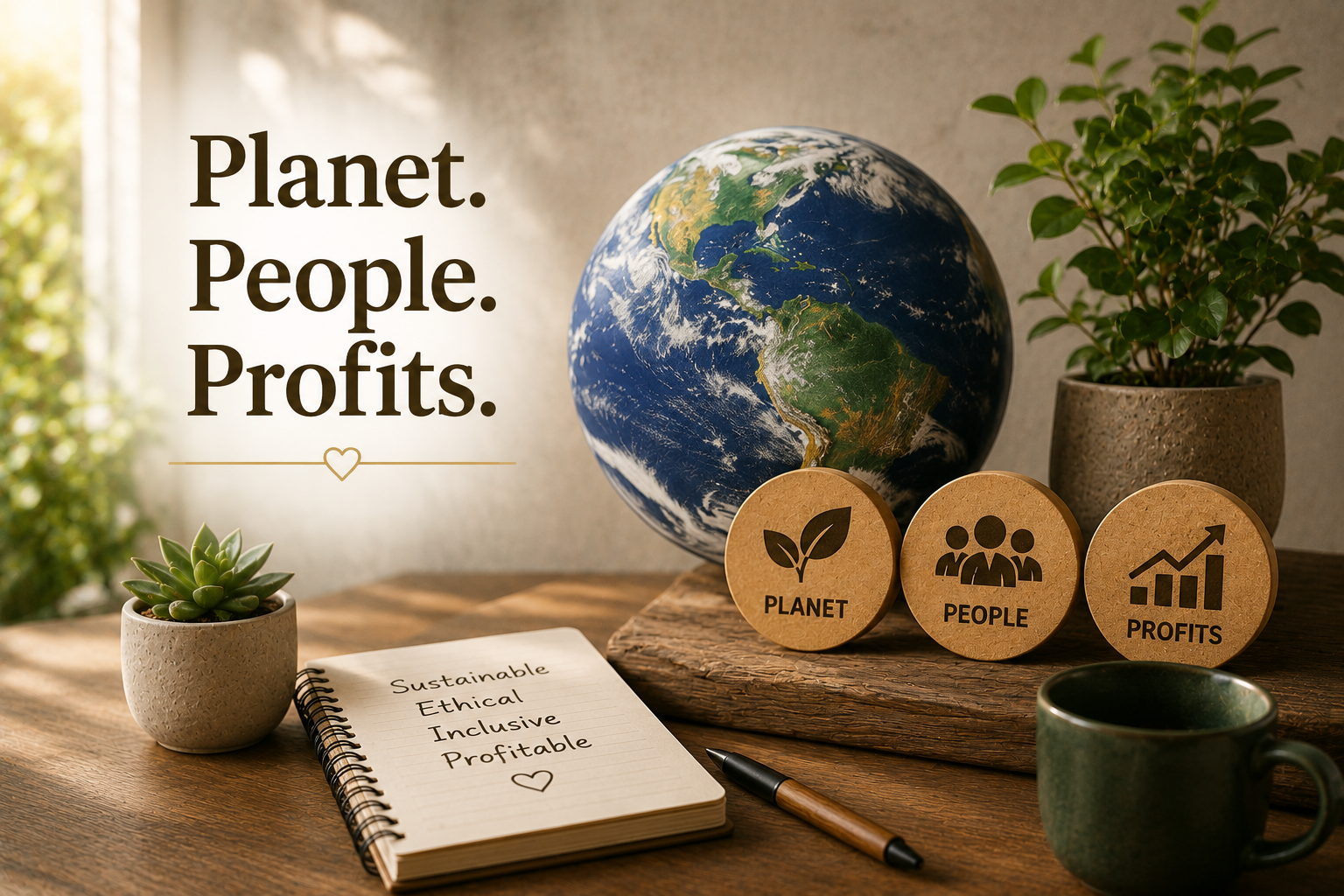
This philosophy is often referred to as the Triple Bottom Line, a framework that encourages organizations to measure success through three equally important dimensions.
- People asks how an organization treats its employees, customers, suppliers, and communities.
- Planet asks how responsibly it manages natural resources and minimizes its environmental impact.
- Profit asks whether the organization is creating lasting financial value through ethical and sustainable business practices.
When these three dimensions work together, businesses create far more than financial returns. They create healthier workplaces, stronger communities, greater environmental responsibility, and organizations that people genuinely want to support.
A New Era of Leadership
The role of leadership is changing. Today’s leaders are no longer expected to focus solely on operational performance or financial outcomes. They are increasingly called to lead with integrity, emotional intelligence, accountability, and purpose. Leadership is no longer defined simply by authority. It is defined by influence. Great leaders recognize that every decision creates a ripple effect. The way they treat employees influences organizational culture. The way they serve customers shapes reputation. The way they manage resources affects the environment. The values they demonstrate establish the standards others will follow. The organizations that will flourish in the decades ahead will not necessarily be the largest or the fastest growing. They will be the ones that earn trust, invest in people, protect the environment, embrace innovation responsibly, and create value that extends far beyond financial statements.
Building Businesses That Matter
Business has always had the power to shape society. Every organization influences lives through the products it creates, the people it employs, the communities it serves, and the example it sets. When leaders embrace the philosophy of Planet. People. Profits., they move beyond simply building successful organizations. They build organizations that make a meaningful difference. The future of business is not about choosing between purpose and profitability. It is about recognizing that the most enduring success comes when people flourish, the planet is respected, and profits are earned with integrity.
Because when all three work together, everyone benefits.
