
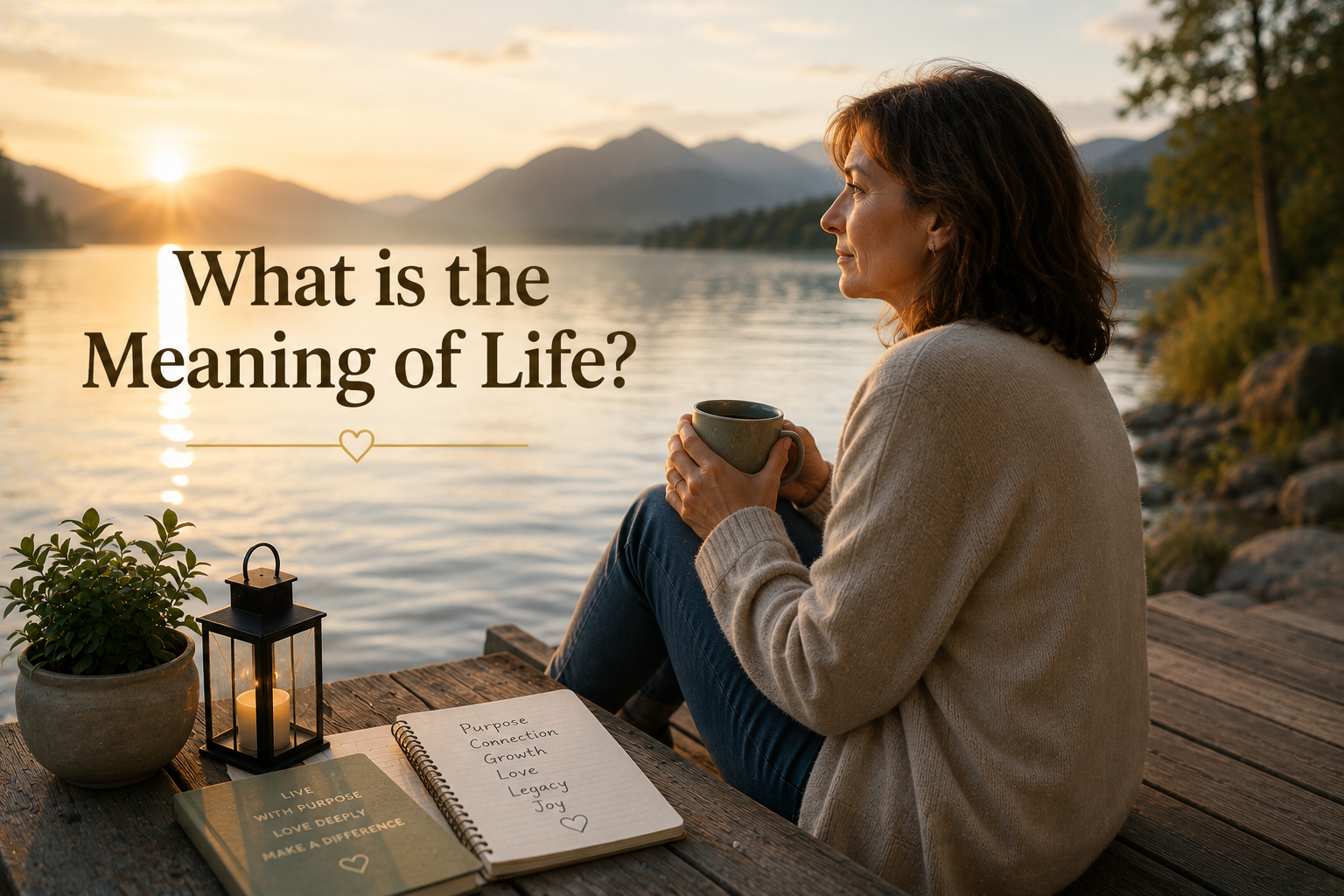
Few questions have captured the imagination of humanity more than this one.
What is the meaning of life?
It is a question that has been asked by philosophers, scientists, theologians, psychologists, writers, and ordinary people for thousands of years. Some spend a lifetime searching for the answer, while others become exhausted trying to define something that may never have a single, universal explanation. Perhaps that is because there isn’t just one answer. The meaning of life is, in many ways, the meaning we choose to give it. That may sound surprisingly simple, yet it carries enormous responsibility. The way we interpret our experiences shapes the way we live. Our beliefs influence our decisions, our relationships, our resilience, and the direction our lives ultimately take.
If we believe life is nothing more than enduring hardship until it ends, we may struggle to see possibility beyond our circumstances. If we believe life is an endless pursuit of success, wealth, or status, we may discover that achieving those things does not necessarily bring lasting fulfilment. If we believe life is about learning, growing, loving, contributing, and continually becoming a better version of ourselves, we are likely to notice opportunities that support those beliefs.
The meaning we give to life influences the life we create. Yet life is also more complex than simply choosing our thoughts. We often hear phrases such as, “You create your own reality,” or “You are 100% in control of your life.” While there is truth in recognizing the power of our choices, this perspective does not tell the whole story. Many people are born into circumstances they did not choose. Around the world, countless individuals face poverty, conflict, displacement, discrimination, natural disasters, illness, or political instability. Children do not choose to be born into war. Families do not choose famine, persecution, or violence. Millions of people wake each day simply hoping for food, clean water, safety, and the opportunity to live in peace. Recognizing these realities invites us to respond with humility rather than judgement. While we cannot always choose the circumstances we face, we can often choose how we respond within those circumstances. Some people overcome extraordinary adversity with remarkable courage. Others need support before they can begin rebuilding their lives. Neither response reflects weakness or failure. It reflects the complexity of being human.
Compassion becomes far more valuable than criticism. There are many beliefs about why suffering exists. Some people believe everything happens for a reason. Others believe in fate, destiny, karma, divine purpose, or the natural unfolding of life. Still others place their trust entirely in science and human agency. Whatever your beliefs, one thing remains true. Every person deserves to be treated with dignity, respect, kindness, and humanity. Most people are not asking for extraordinary lives. They simply want to feel safe. They want opportunities to work, provide for their families, enjoy meaningful relationships, express themselves freely, and experience moments of joy. They want to be seen, heard, valued, and treated fairly. These are not unreasonable hopes. They are deeply human ones.
Throughout history, there have always been individuals and organizations working tirelessly to reduce suffering, promote justice, improve healthcare, educate communities, protect human rights, and create opportunities for others. Their work reminds us that positive change is possible when compassion is translated into action. There have also been times when fear, greed, corruption, prejudice, and the pursuit of power have caused immense harm. History repeatedly teaches us that when self-interest outweighs our shared humanity, entire communities can suffer. This is why every generation has a responsibility to ask an important question: What kind of world am I helping to create?
Perhaps the meaning of life is found not only in what we achieve for ourselves, but also in how we influence the lives of others. Are we adding to fear, division, and conflict? Or are we helping to create understanding, kindness, hope, and healing? Every conversation we have, every decision we make, every act of generosity, patience, forgiveness, or encouragement contributes to the culture we leave behind. Small actions often create ripple effects far beyond what we can see. Real change rarely begins with governments alone.
It begins with individuals choosing integrity over convenience, compassion over indifference, understanding over judgement, and courage over silence. When enough people make these choices consistently, families become stronger, workplaces become healthier, communities become more connected, and society begins to change from the inside out. Perhaps human evolution is not simply about technological advancement or scientific discovery. Perhaps it is equally about our capacity to grow in wisdom, empathy, emotional maturity, and love.
The meaning of life may never be a destination we finally reach. It may instead be something we create every day through the choices we make, the relationships we nurture, the values we live by, and the difference we leave in the lives of others.
- So, be thoughtful about where you place your focus.
- Choose beliefs that bring hope rather than despair.
- Choose perspectives that encourage growth rather than fear.
- Choose actions that leave people better than you found them.
- Because in the end, the meaning of life may not be something waiting to be discovered.
- It may be something we each have the privilege of creating.
