
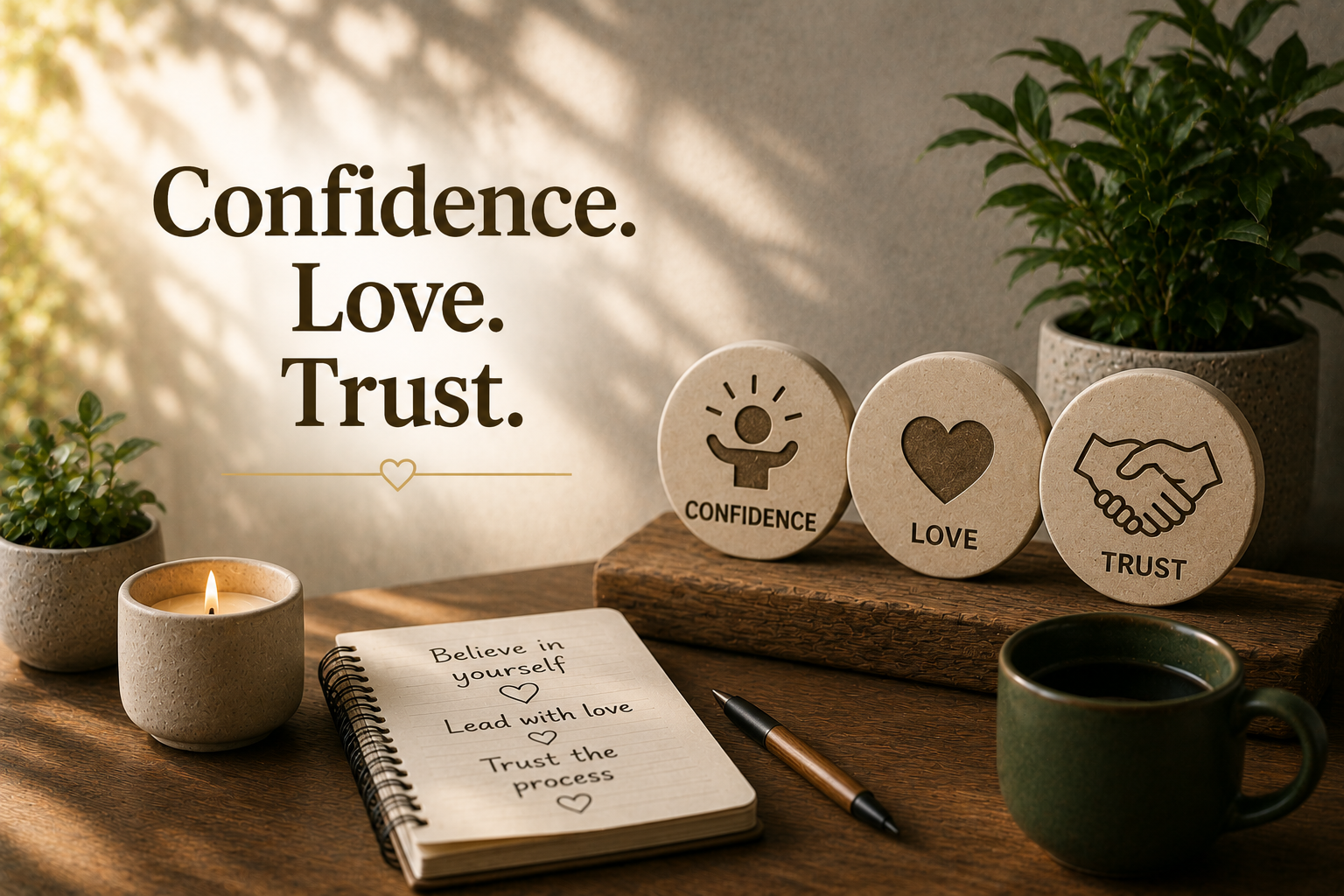
There are three qualities that quietly shape almost every area of our lives: confidence, love, and trust. They influence how we see ourselves, how we build relationships, how we make decisions, and how we respond to both opportunities and challenges. While they are closely connected, each one develops in its own way and requires ongoing attention throughout our lives.
Take a moment to think of two people you know—whether personally or from afar. One is exceptionally confident, while the other seems to struggle with self-doubt and insecurity. Did two people immediately come to mind? Confidence is often one of the first qualities we notice in others. It has a way of drawing people in. Confident individuals appear comfortable in their own skin, willing to take risks, speak their minds, and embrace new opportunities. Yet confidence is frequently misunderstood. Many people assume confidence is something you are born with. It isn’t. Confidence is built. Behind every confident person are countless moments of uncertainty, discomfort, failure, and perseverance. What appears effortless today is often the result of years spent learning, growing, making mistakes, and continuing despite them. The quickest way to build confidence is not by waiting until you feel ready. It is by doing the very things that make you uncomfortable. Confidence grows through evidence. Every time you take a small step outside your comfort zone, you teach yourself that you are capable of more than you previously believed. Every promise you keep to yourself strengthens your self-belief. Every challenge you face becomes another reminder that you can handle more than you once imagined. Progress is far more important than perfection. The goal is not to become fearless. The goal is to become willing. As confidence grows, another equally important relationship begins to develop—the relationship you have with yourself.
Love is one of the most frequently used words in our language. We speak about loving our families, our friends, our pets, our homes, our careers, our favorite foods, and even the latest piece of technology we have purchased. Yet these experiences of love are not all the same. They carry different meanings, different depths, and different expressions. Perhaps one of the most challenging forms of love is self-love. Not because it is selfish, but because it requires complete honesty. We know ourselves better than anyone else ever will. We know the mistakes we have made, the words we wish we could take back, the opportunities we missed, and the moments we are least proud of. We know our fears, our insecurities, our regrets, and the beliefs that quietly influence our choices. Others may only see our actions. We understand the thoughts and emotions that led to them. For this reason, many people become their own harshest critics. They carry guilt long after lessons have been learned. They replay old conversations, revisit painful memories, and continue punishing themselves for decisions that can no longer be changed. But growth requires something different. It requires forgiveness. Forgiveness does not erase the past or excuse harmful behavior. Rather, it acknowledges that while we cannot change yesterday, we can choose how we live today. Every mistake holds the potential to teach us something valuable if we are willing to learn from it. Self-love is not pretending to be perfect. It is accepting that we are human while remaining committed to becoming better. It is choosing to treat ourselves with the same compassion, patience, and understanding that we so willingly extend to those we care about. When we learn to forgive ourselves, we create space for healing. When we heal, we become more present. When we become more present, we are better able to live intentionally rather than being defined by our past.
The third quality is trust. For many people, trust is one of the most difficult things to develop. Life has a way of teaching caution. Disappointments, broken promises, betrayal, dishonesty, and manipulation can leave lasting impressions. Once trust has been damaged, rebuilding it often takes time. At the same time, blind trust can be equally unwise. We live in a world where misinformation spreads quickly, scams have become increasingly sophisticated, and not everyone has honorable intentions. Healthy trust is not about believing everything we hear or assuming everyone deserves unlimited access to our lives. Healthy trust is built gradually. It grows through consistency, honesty, reliability, and mutual respect. It is perfectly reasonable for people to earn our trust through their actions rather than simply their words. Wisdom teaches us to remain open without becoming naïve. One of the greatest indicators of character is often how people speak about others when those individuals are not present. Those who consistently criticize, gossip, or undermine others may eventually do the same to us. Rather than participating in those conversations, we always have a choice. We can choose kindness over criticism. Understanding over judgment. Integrity over gossip. Ultimately, the most important form of trust may not be trusting other people at all. It is trusting yourself. Trusting yourself to make thoughtful decisions. Trusting yourself to learn from mistakes. Trusting yourself to recognize unhealthy situations. Trusting yourself to set healthy boundaries. Trusting yourself to keep moving forward, even when life feels uncertain.
- Confidence gives us the courage to begin.
- Self-love gives us the compassion to continue.
- Self-trust gives us the wisdom to navigate whatever lies ahead.
Together, these three qualities create a strong foundation for a healthy, meaningful, and fulfilling life.
They are not destinations we reach once and for all. They are choices we make every day. So continue building your confidence, one courageous step at a time. Choose to forgive yourself and practice genuine self-love. Trust yourself to make wise decisions that align with your values and the life you want to create. You will not always get everything right. None of us will. But every day offers another opportunity to grow into the person you were always capable of becoming.
And that is more than enough.
