
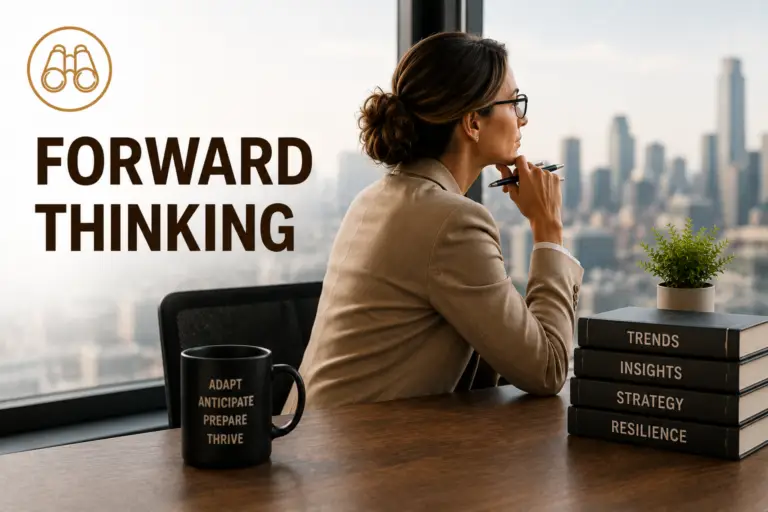
Forward thinking is about preparing yourself for change, growth, and the evolving demands of today’s business world. Rather than simply reacting to change, it encourages you to anticipate challenges, embrace new opportunities, and develop the mindset needed to thrive in an increasingly complex environment.
Modern business moves faster than ever before. Leaders, employees, entrepreneurs, and professionals are expected to balance constant communication, advancing technology, increasing workloads, shifting markets, and growing expectations. While these demands create opportunity, they can also contribute to burnout, stress, anxiety, and information overload when left unmanaged. Being future-ready is not about working harder or moving faster—it is about working smarter, thinking strategically, and creating sustainable ways to perform at your best.Forward thinking is built on adaptability, continuous learning, emotional intelligence, and resilience. It means remaining curious, staying informed, and being willing to evolve without losing sight of your values. The most successful businesses and professionals recognize that long-term performance depends not only on innovation and productivity, but also on the wellbeing of the people behind the work.
This section explores three essential areas that help you prepare for the future: recognizing and preventing burnout while managing stress and anxiety, navigating information overload, and staying current in an ever-changing world. Together, these topics provide practical insights to help you build a career and business that are not only successful, but sustainable, balanced, and ready for whatever comes next.
Burnout, Stress & Anxiety

Ongoing pressure can gradually affect your mental and emotional wellbeing, relationships, performance, and overall quality of life. By recognizing the signs early and developing healthy ways to manage stress, you can build resilience, restore balance, and protect your long-term wellness.
Information Overload

Staying Current

Burnout, Stress & Anxiety
Burnout, stress, and anxiety can affect every area of your personal and professional life if left unaddressed. When pressure becomes overwhelming, it can impact your wellbeing, performance, relationships, and ability to think clearly and function effectively each day. Over time, constant stress can reduce motivation, cloud decision-making, diminish creativity, and leave even the most capable people feeling emotionally and physically exhausted.
Recognizing the early warning signs is essential before they develop into more serious challenges. Learning to establish healthy boundaries, manage your energy, prioritize self-care, and respond to pressure in constructive ways can help you maintain both your wellbeing and your effectiveness. This is about recognizing the signs of emotional overload, creating healthier coping strategies, and learning how to restore greater balance, calm, and resilience so you can continue to thrive in both your work and your life.
Information Overload
Information overload can leave you feeling mentally exhausted, distracted, and overwhelmed by the constant stream of information, notifications, and demands competing for your attention. When your mind is overloaded with too much information, it becomes harder to focus clearly, make decisions, retain important details, and maintain emotional balance and productivity. Rather than feeling informed, you may find yourself feeling scattered, reactive, and unable to give your full attention to what matters most.
In today’s digital world, the ability to filter, organize, and process information has become just as important as acquiring it. Creating healthy boundaries around technology, reducing unnecessary distractions, and developing intentional habits can help you think more clearly, improve your concentration, and make better decisions. This is about learning how to simplify, prioritize, and manage information more intentionally so you can create greater clarity, focus, and peace of mind.
Staying Current
Staying current is about remaining informed, adaptable, and open to continuous learning in an ever-changing world. When you actively develop your knowledge and skills, you strengthen your confidence, increase your value, and remain prepared for future opportunities and challenges. Whether it’s keeping pace with industry developments, new technologies, changing workplace expectations, or evolving best practices, ongoing learning helps you remain relevant and ready to grow.
Staying current does not mean chasing every new trend or trying to know everything. It means being intentional about what you learn, remaining curious, and continually building the knowledge and capabilities that support your personal and professional goals.
This is about embracing growth, staying aware of emerging trends, and creating habits that support lifelong learning and professional development.
